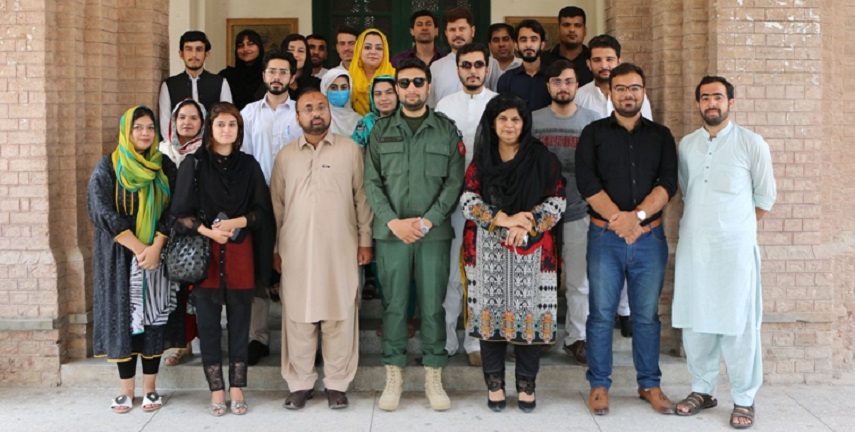
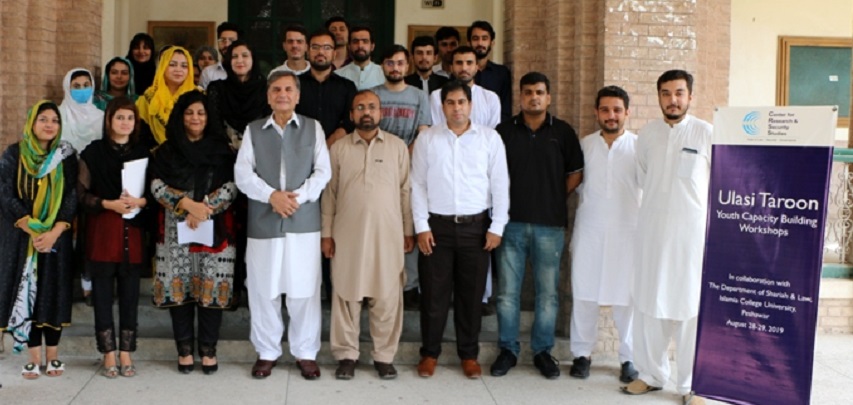
The youth must cultivate, practice and nurture critical thinking skills for meaningful participation in the democratic discourse and decision making processes. They should challenge the stereotypes, not believe in everything being told to them – as it is – and must verify the authenticity through critical thinking and research, and not just relying upon a singular source of information to shape their opinions. Only by resorting to these modern perspectives, can they strengthen democracy.
These were the notions expressed by Mr. Farid Ullah Khan, Chairman, Khyber Pakhtunkhwa Public Service Commission, during the twenty-first round of Ulasi Taroon, Youth Capacity Building Workshops organized by the Center for Research and Security Studies (CRSS) at and in collaboration with Department of Shariah and Law, Islamia College University, Peshawar.
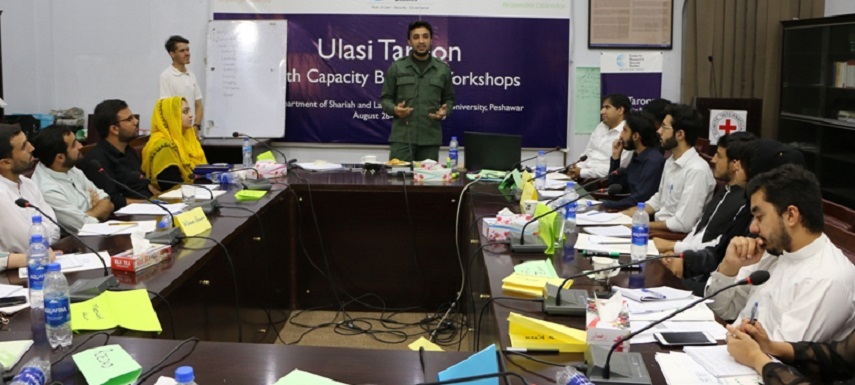
He said that the political parties should practice democracy even within their internal affairs; promoting the democratic norms and values indiscriminately where the politics of inheritance ought to be discouraged. While it’s important to refer to the past to derive critical lessons and inform future decision making, the youth must make their valuable contributions in the present and look forward to the future to harness the potential opportunities. As the past is beyond control and cannot be changed, so instead of just complaining about it, start making the most out of present to ensure a connected future.
The youth must endeavor to wrestle with the dilemmas facing Pakistan and strive to resolve them where possible. At the same time, they should conserve their optimism and energies by practicing gratitude, participation in the community development and the virtues of tolerance and patience. Optimism demands looking up for potential opportunities that come along with a problem. There is always a good reason in every bad situation and things happening to you.
Mr. Muhammad Waqar Azeem, a Police Services of Pakistan officer posted in Frontier Constabulary, Peshawar as District Officer, said that rule of law is so critical that people have always been striving to achieve it in the human history. The social contract applies on every member of the society to nudge them fulfill their responsibilities as responsible citizens as well as ensure equal rights. Social cohesion and peaceful coexistence demands adherence to the core constitutional values of respect, acceptance and rule of law. An immaculate value system is absolutely essential to strengthen the social fabric that binds people together in a cohesive form; with all the fundamental democratic ideals at the core. Only by mutual trust and cooperation among the citizens to achieve the shared goals of community development, can social cohesion be nurtured. It must be understood in letter and spirit that infringing on others rights as equal citizens, also compromises one’s own rights as a citizen. Tolerance perspectives must be propagated as they are the essential prerequisites for social harmony and coexistence. Rule of law and certainty of punishment is always conducive to peace. The modern societies are seen more tolerant and patient due to rule of law and tolerance perspectives living in there. Social mobility is imperative for social cohesion and coexistence; where everyone is given equal opportunities to progress and prosper. Deviation from constitution and giving up on rule of law lead to social discord and increases the society’s vulnerability to the push and pull factors of radicalization.
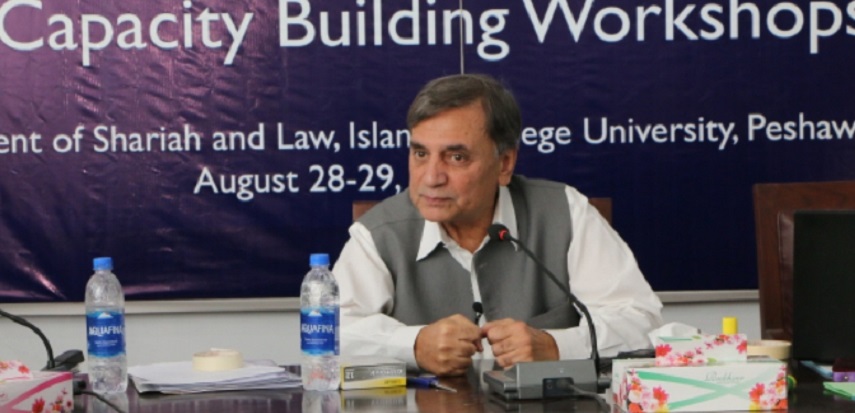
The most important and significant law is the law of consciousness; one of the most significant aspects of rule of law is the collective consciousness of the society including self-accountability. Every law needs to be moral, democratic and cater to the needs and rights of the people. Rule of law also means that the law should be simple and easily understandable by the society to minimize the probability of misinterpretation, and enacted for the citizens and not for any institution. It demands that everyone must be equally accountable and subject to law with free, fair and impartial trial, equal access to justice and right to due process of law. The absence of fair trial cultivates the feelings of deprivation in the society.
Economic organizations help achieving social cohesion and this role of economic organizations should be actively utilized in Pakistan. This should include investment in the underprivileged areas. Therefore, all such organizations should be cognizant of their role to uphold social cohesion.
Judiciary, executive and legislature represent three core pillars of the state where there is also a system of check and balance in place for separation of powers. The legislators enact laws as public representatives and obliged not to do anything against the spirit of constitution. Any law enacted against the spirit of constitution and fundamentals of democracy can be challenged in the court of law; supreme court which can declare it null and void or void ab initio. It must conform to the values and collective conscience of the society. Nepotism should never be appreciated as it is always detrimental to social cohesion. Diversity is the asset of any society and should be respected as well as celebrated. The culture of debate is vital to cultivate and promote tolerance perspectives where the diverse opinions should be understood, respected and appreciated to add value to the national discourse.
As responsible members of society, we should adopt such a harmonious model of peaceful coexistence where we are not only just considerate of but also fulfill each other’s needs through an inclusive cooperation mechanism. This will not only strengthen social cohesion but is also a secret to happiness as the real happiness lies in helping others.
“Social justice is the whole theory of rule of law and critically important for uphold it”, he concluded by adding that the culture of KP police is quite egalitarian where it won the trust and hearts of the people by developing linkages critical to address the trust deficit.
Mrs. Shagufta Khalique, educationist, while talking about the effective provision of human rights and civic engagement of youth, said that one of the reasons for human rights violations is that human rights education is not emphasized. She suggested that youth as change-makers and future leaders must enhance their knowledge of human rights so that the violations can be prevented. Sharing her views on ideals of diversity equality and tolerance, she added that these ideals are achievable once youth starts believing in the importance of these values of social cohesion.
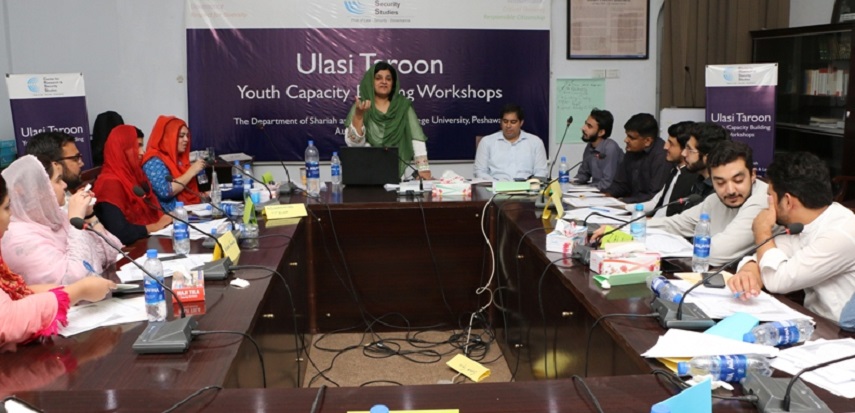
Looking at the importance of conflict resolution, she said that conflict and its negative impact can be minimized with the skills of effective analysis, communication, empathy and in-depth understanding of the context. Like how the Ulasi Taroon workshops aim, the youth must be engaged in the peacebuilding process and be provided with the opportunities for dialogue and hands-on experience for conflict resolution.
Mr. Shams Momand, Project Manager, CRSS spoke about the role of media including broadcast, print and social media to counter radicalization and disseminate the positive messages and tolerance perspectives. It has tremendous outreach; key to cultivate the public in the cohesive values. The youth should positively use this platform to spread the messages of peace and harmony.
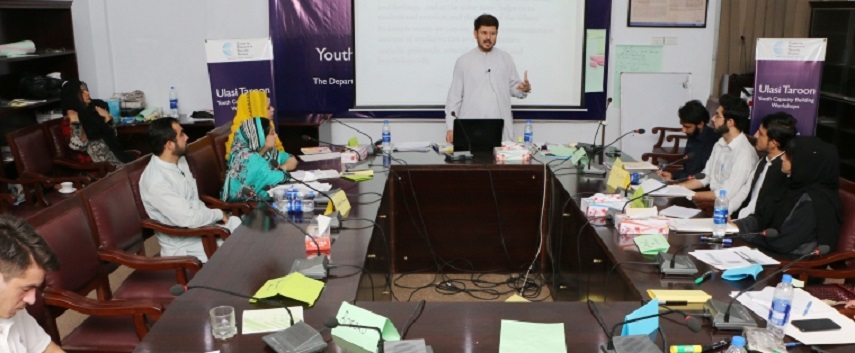
Mr. Malik Mustafa, Manager Programs, CRSS underscored that the key to social cohesion lies in abiding by the core constitutional values of peace, respect and coexistence enshrined in the constitution. The gratitude, optimism and patience are the virtues that can not only nurture happiness but can also change the way the youth can pursue their visions and achieve success as motivated individuals.
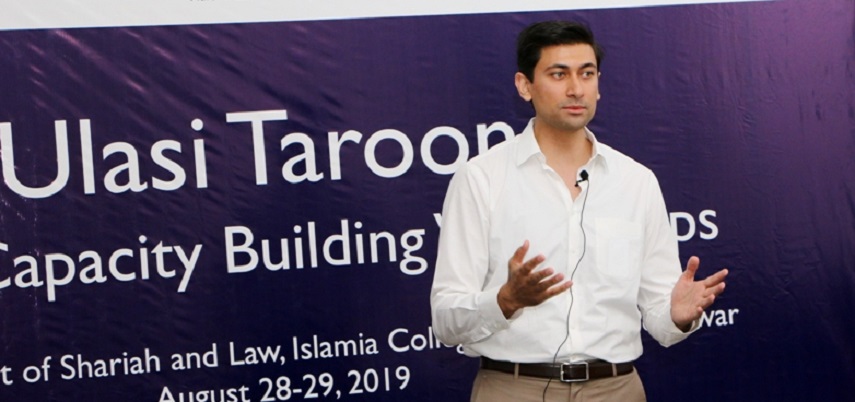
The youth – as future leaders – should realize the importance and message multiplication and dissemination and thus – must endeavor to educate the other members of society within their academic, social and professional spheres in the core constitutional values critical to social cohesion and harmony.
Ulasi Taroon is a counter radicalization initiative of CRSS that aims to address the radicalization challenges, extremist ideologies and foster social cohesion through a discourse anchored in the core constitutional values which are fundamentally essential prerequisites for social peace and harmony. The endeavor aims to cultivate and sensitize the youth – in the universities across KP – in the core values in the Pakistani constitution and our social contract. It’s an attempt to highlight the criticality of abiding by these ideals – such as adherence to rule of law, primacy and sanctity of constitution, equal citizenry, responsible citizenship, respect for fundamental human rights, tolerance for diversity and different opinions, inclusive democracy and good governance – as a measure of fostering social cohesion and peaceful co-existence.