



 Islamabad (Tuesday, April 10, 2012): Both Pakistan and India musturgently assign technical and legal experts to discuss complextechnicalities and legalities of the Siachen Conflict which has becomea global concern. Both countries would do a great service to humanityand the environment if they declared the disputed region as a PeacePark and let international legal experts and scientists deal with theconsequences of the military presence and the impact of theiractivities in the region. Both countries must abide by Principle 19 ofthe June 1992 Rio de Janiero Declaration and address threats to thesuvival of lower riparians such as Maldives and Bangladesh.
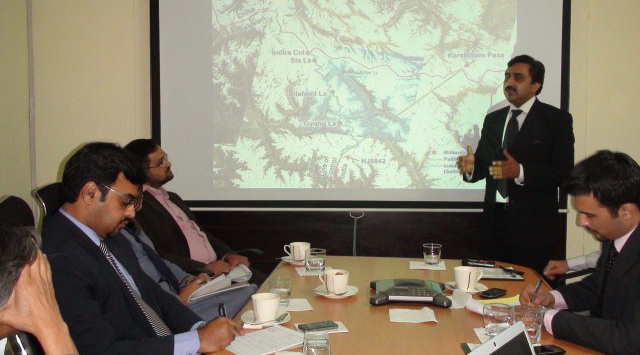
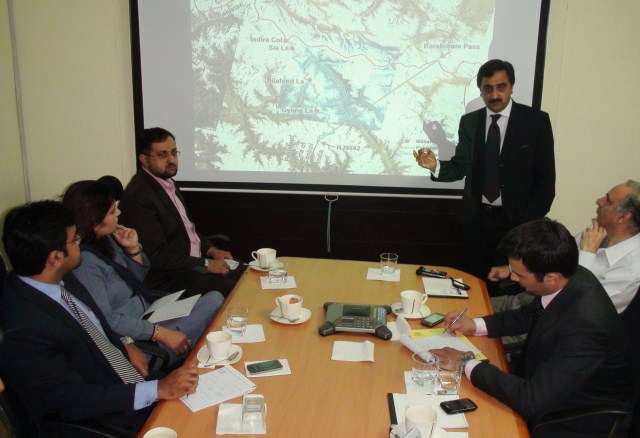
To prevent any further militarization of what is at the momentconsidered as the highest and coldest battlefield both India andPakistan can resort to an already existing mechanism i.e. UnitedNations Military Observers Group for India and Pakistan (UNMOGIP).These demands came through at a round-table that the Center forResearch and Security Studies (CRSS), Islamabad organized on April10, 2012 to discuss the latest tragedy at the disputed Siachen Glacierresulting in the deaths of 135 Pakistan army personnel.
 Since April 1984, when the Indian Army carried out a covert operationcode-named “Meghdoot” and established permanent posts at the SiachenGlacier at heights as high 22,000 feet, the two nuclear-armedneighbours have confronted each other militarily for control over thehighest battlefield in the world and its approaches in the easternKarakorum mountain range, adjacent to the borders of India, Pakistanand China.
The deadly avalanche that struck the battalion headquarters of theNorthern Light Infantry (NLI) in Gyari sector of Siachen Glacier onSaturday, April 07, 2012 underlined the appalling human and economiccosts of the protracted bloody conflict over the possession of theterribly inhospitable 50 miles glacier, which has eaten up over 8,000Indian and Pakistani soldiers between April 1984 and April 2012. As aresult of the latest natural disaster in the glacier region, 135soldiers of Pakistan Army were buried alive under a mass of snow,stones, mud and slush more than 1,000 meter wide and 25 meter high’,from the last 72 hours.
 The conflict at Siachen has resulted in thousands of casualties fromboth sides, mainly because of adverse climatic conditions and harshterrain. According to careful estimates by defence analysts, Pakistanspends approximately Rs15 million a day to maintain three battalionsat the Siachen Glacier, which makes Rs450 million a month and Rs5.4billion a year. On the other hand, the deployment of seven battalionsat the Glacier costs India Rs50 million a day, Rs1.5 billion a monthand Rs30 billion a year.
On an average, defence experts say, one Pakistani soldier is killedevery third day on the Siachen Glacier, showing approximately 100casualties every year on an average. Similarly, one Indian soldier iskilled every other day on the Siachen Glacier, at an annual average of180 casualties. According to unofficial figures, over 3,000 Pakistanisoldiers have lost their lives on the bloody Siachen Glacier asagainst over 5,000 Indian casualties. At present, there areapproximately 7,000 Indian Army troops and about 4,000 Pakistanitroops stationed at the Siachen Glacier.
Who said what?
Environmental aspects of the conflict:
Discussing the environmental aspect of the Siachen tragedy, waterexpert, and CRSS board member, Arshad Abbasi said that the accidentmight have been the result of a glacier surge. It can be because ofthree reasons: due to temperature, movement of military men andearthquake. But I understand that this particular case is due to therise of temperatures. Since 1885 until today, there were 39 glaciersurges in the area. Pakistan has one pass under its control whileIndia occupied three passes. The glacier is under stress due to risingtemperature in the area. There are three airfields on the Indian sideof the glacier and burning of fuels there is contributing towardsspike in temperature. Chemical blasting of the mountains for makingcamps for the soldiers is also hazardous for the glacier. Total massof the glacier has dwindled considerably during the last two decades.Moreover, in 2001 India laid down kerosene oil pipelines on her sideof the glacier and further made the situation climatically worst.
Against this backdrop, one can conclude that Sicahen is melting onlybecause of military activity. Both Pakistan and India should take boldsteps for solving the issue and should hand over glacier the UNESCOand scientists for studying and assessing climatic impacts.
Abbasi also pleaded for a third-party mediation to settle the disputeand save the vital glacier from further damage.
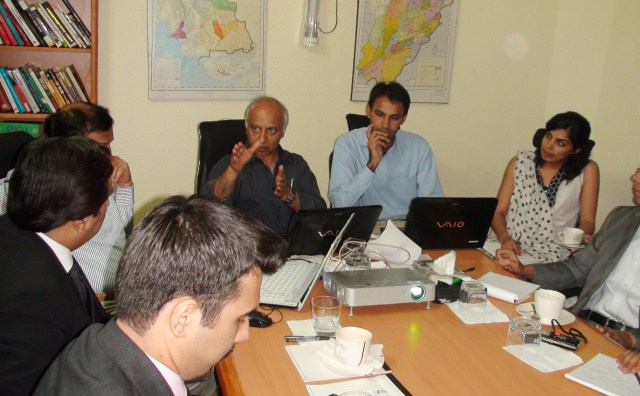 Legal aspects of the conflict:
Prominent legal expert Ahmar Bilal Sufi said that the issue ofdemarcation of the territory at the glacier was not settled underKarachi Agreement of 1954 between India and Pakistan. But ambiguity inparts of the tect and the subsequent interpretation of this verysentence are causing conflict. Both India and and Pakistan interpretcertain parts of the agreement from their respective positions.Meanwhile, there are clear guidelines in international law for thesolution of such disputes. Looking at the history and facts of theconflict, Pakistan has upper hand and it should take the issue to theInternational Court of Arbitration because in this case Indiaaggressed into the Glacier Region in 1984. He pointed out that in manypre-conflict atlases produced by international organizations andencyclopedias Siachen was shown as part of Pakistan.
Legal solutions of the conflict are possible but might take a littlewhile. The Indian arguments flow from Kashmir dispute and it wants tolink the latter with Siachen glacier conflict. Pakistan has beencontesting this since 1984 , first by moving troops to their currentposition and then by raising this at talks.
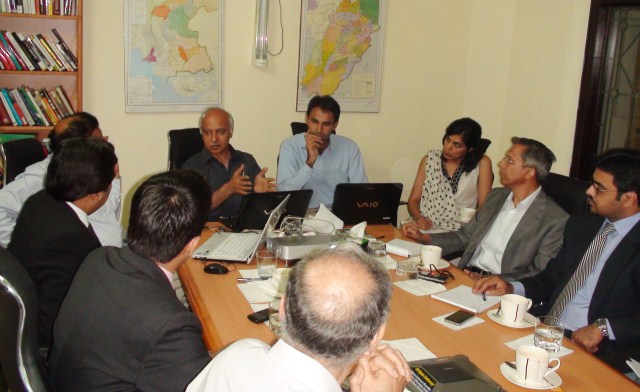 Soofi believes that If Pakistan gives up Siachen unilaterally, itcould have a domino effect and will expose entire Gilgit-Baltistan andAJK to India. Third party mediation is also possible and US can playan important role in the solution of the conflict. On part of bothPakistan and India, though politically there have been headways but nolegal breakthrough has been achieved as yet. Thus there is need forinformal legal and technical brainstorming by the experts of bothstates to devise a framework for dispute settlement and then politicalleadership can discuss possible solutions of the issue.
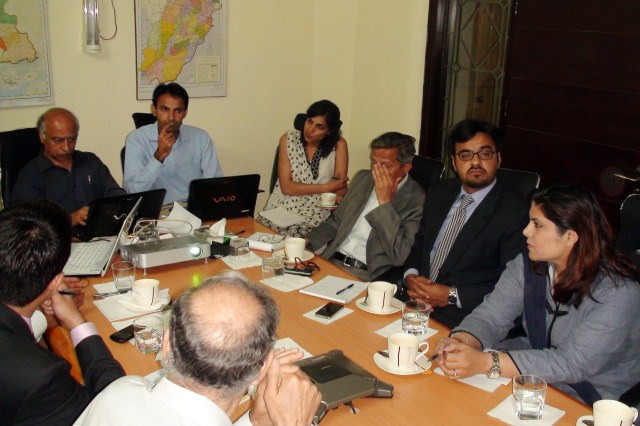 Arshi Saleem Hashimi of National Defence University proposed that saidthat civil society in both countries should link up to put pressure onrespective governments to withdraw their militaries from the glacierand seek a peaceful solution of the conflict.