



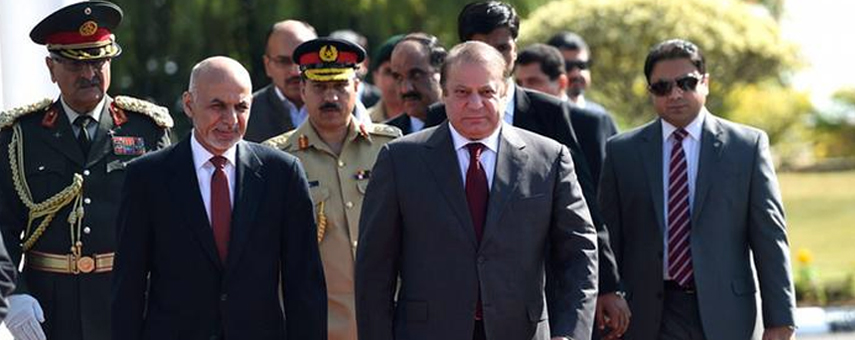
Is the Pakistan-Afghan relationship hostage only to the motivated approaches of the political establishments and bureaucracies or does it also suffer because of our deficiencies?
Most probably a combination of both Let us consider this; the Jinnah Hospital that is under construction in Kabul is a bitter comment on Pakistan’s outdated Planning Commission; the ground breaking ceremony of this facility took place in 2007 and it is still way off completion.
One of the reasons is local security conditions and non-cooperation by the Afghan authorities. They have been reluctant in exempting critical equipment being imported for installation at the hospital from customs duties. The same has been the case with the hardware for the Rehman Baba School and Hostel. Following a meeting with a Pakistani Track 11 delegation in mid-November chief executive Dr. Abdullah Abdullah promised to take up this issue.
The other major reason lies this side of the Durand line and relates to the involvement of several Pakistan government and army-related institutions. Petty audit objections by the ministry of finance , bloated bureaucratic egos, preference for institutional interests (instead of national image) and the pretext onega requirements continue to stonewall accelerated execution of these projects. Payments to the contractors of the Jinnah Hospital have been held up for over two years.
We have not been able to complete a project in nearly a decade in a country that has become so critical to Pakistan’s existence. The Kidney Hospital in Jalalabad is another example of bureaucratic egos and political motivations. Its physical structure was competed five years ago but it remains a ghost house. In another case, Pakistani authorities are waiting for the Afghan government security to complete a 25km stretch on the Torkham-Jalalabad highway, despite the fact that the Afghan government itself is hamstrung by security crisis in that region; instead of finding a way to hire private security out of that project funding our officials have been waiting for the Afghan authorities to provide them security. The Ministry of Planning, Ministry of Finance, FWD, NESPAK and NLC are all part of the planning and execution of Afghan reconstruction projects and procedural hiccups lead to inordinate delays in implementation even of a flagship project such as the Jinnah Hospital.
One would also hope that the Afghan leadership plays its role in influencing the narrative on Pakistan. In addition to the bureaucratic hurdles, the sentiment or biases against Pakistan currently run high. Despite the baggage of mistakes by successive Pakistani rulers, neutralising this sentiment is not impossible. No doubt mistakes have been made on both sides. Yet, positive messaging shall have to flow from the top. While the Afghan leaders such as President Ashraf Ghani and Abdullah Abdullah can try to remold the narrative on Pakistan and attempt to delink social sector cooperation from the security discourse, Pakistani civil and military leadership must find a mechanism to deal with the delays in Afghan projects.
Can we salvage this important symbiotic relationship with a prime minister, who is basking under a sense of triumph following General Sharif’s exit, and the new army chief, who may promise a better civil-military strategic synergy on foreign policy issues such as Afghanistan and India?
Can Pak-Afghan leaders turn a new page ahead of and at the upcoming Heart of Asia Conference in India? The arrival of Donald Trump in the White House makes a recalibration all the more instructive and urgent. Beyond doubt, Pakistan’s perceptions in Washington is linked with relations with India and actions in Pakistan, As they endeavour to handle a belligerent Modi government; Pakistani leaders can still do a lot for Afghanistan’s social sector rehabilitation and construction.
Hospitals and schools are instruments of relief for the common man. And that relief can be a vehicle to reviving Afghans’ confidence in Pakistan
The author Imtiaz Gul is the Executive Director of Center for Research and Security Studies (CRSS). This article originally appeared in The Express Tribune, November 30, 2016. Original Link.