



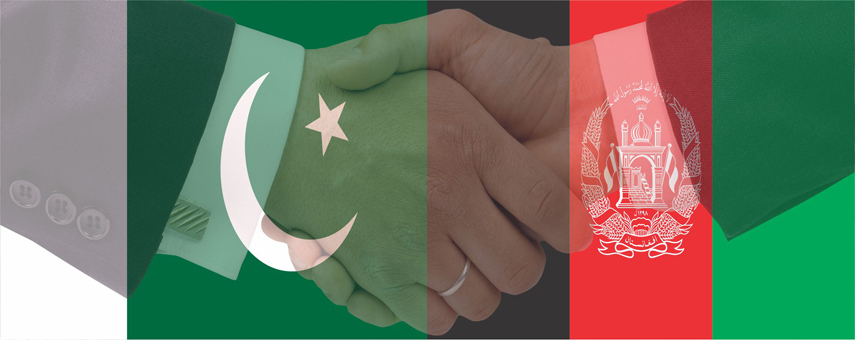
A ten-member Afghan delegation comprising members of civil society and parliament arrived in Islamabad on Tuesday, October 18, 2016 for the first meeting in the land-mark series of Track 1.5/2 meetings/ dialogues.
This initiative titled “Beyond Boundaries|Phase II” has been undertaken by the Islamabad based Center for Research and Security Studies (CRSS) – as part of its efforts to improve bilateral relations between Pakistan and Afghanistan. The project is being implemented in strategic partnership with Centers’ Afghan Counterpart organization Women & Peace Studies Organization (WPSO) and funded by the British High Commission in Islamabad. The Phase I of the project – which ran through November 2015 to March 2016 – brought together Afghan and Pakistani security and civil society experts for an unprecedented series of six meetings to: discuss bilateral acrimony, help deescalate the heightened tensions, soothe the bitter context and explore ways of improved cooperation between the two neighbours. The ongoing Phase II aims to convene six more meetings; formulating Pakistan Afghanistan Joint Committee (PAJC) with members from both the countries and address the same goals in a more focused manner.
The Phase II of the project builds on the successful outcome of its prequel “Beyond Boundaries” which did a good job of initial ice-breaking, scene setting and laid foundation for more result-oriented conversations and structured dialogue to generate more actionable policy recommendations around the identified issues of border management, security, easement of formal trade, refugees, media-intellectual exchanges. The spectrum of potential discussion grounds has been further enhanced by the addition of issues like health, education and importance of dialogue for peace process after orientation meetings of the project.
The idea of Pak- Afghan Joint Committee (PAJC) was to develop a bilateral Track II mechanism to try and help overcome the deeply-rooted acrimony, distrust, misperceptions and suspicions through a focused and meaningful dialogue. The PAJC will comprise 5-7 members each from both countries including security experts, parliamentarians, civil society, and business/media representatives. CRSS seeks to encourage the joint committee members to take ownership of the project, thereby becoming the project’s promoters and acting as a bridge to and between the two security establishments and key decision-makers.
The members will have captive interactions to formulate policy recommendations and high level strategic meetings with stakeholders during their visits to Afghanistan and Pakistan. The media engagement as part of the visits will aim to increase the level of awareness, help improve local perceptions and promote debate about socio-political conditions inside Afghanistan and Pakistan to detox respective narratives. The programme will also include university lectures by the selected members from both sides to build understanding of the academia/ university students on the situation in both countries, complexities of Af-Pak relations and criticality of engagement through non-security approach. This will hopefully improve perceptions on both sides and help them become force-multipliers.
A total of six workshops/ visits of joint committee members are planned through the project life cycle; one each at Islamabad, Karachi and Lahore in Pakistan and Kabul, Mazaar-i-Sharif and Herat in Afghanistan. The project will involve neutral experts – as chairs/ moderators – for keeping the bilateral discussion balanced, neutral and objective.