



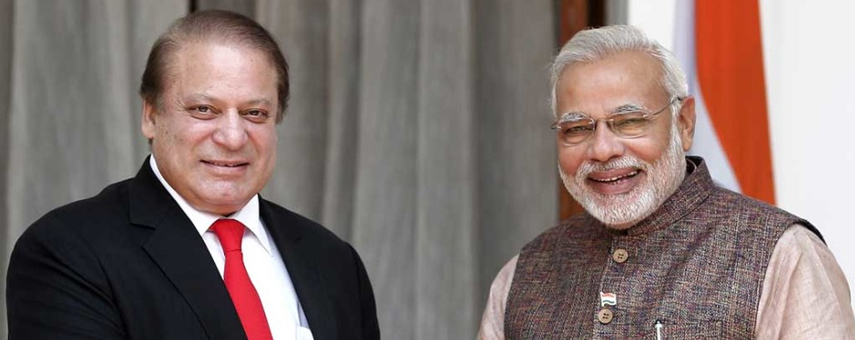
In this media dominated age where hype and hysteria prevail, views of Pakistanis and Indians about each other and their respective worlds continue to collide.
The propensity to assume the worst about each other and to wholly succumb to hyper nationalistic furies is a tragic flaw. In great measure, this stems from a psyche of fear and insecurity, which is evident in vociferous sentimentality.
India’s thought, conduct and policies often lack originality and a sense of ground reality. It often seems a bland imitation of the West, based on theories of geo-politics of a bygone age.
Contrast this with the Chinese. A nation and a civilization that has through thousands of years maintained its essence- poise and confidence, and an unwavering belief and faith in its glorious future.
The Chinese leadership and people have pursued their historical mission of rejuvenation of the Chinese nation and have delivered on all counts and by all standards.
China’s civilizational renaissance;
the transformation of China into a great power; and comprehensive aggregation of China’s national strength is the most consequential development of this century.
China’s peaceful rise, its rejection of the notions of hegemony and power politics, its moral voice in world affairs, its humility, its policies and practice of the ‘new thinking’ is worthy of deeper understanding and emulation.
Most notably, the One Belt and One Road initiative of President Xi Jinping provides the answers to the topical questions of our times. An inclusive preposition to build corridors and connectivity for peaceful commerce and mutual prosperity. A win -win model of cooperation among nations of the world.
The Eurasian land bridge and maritime routes, which are designed to expand avenues of development and prosperity on a scale not witnessed ever before.
In short, geo-economics rather than geo-politics is the way forward in a world troubled by strife and conflict and riven by dissensions of class, creed, mythologies and ideologies.
In comparison, India’s quest for great power status is in sharp contrast. India believes that it could be rated as a major power primarily on the basis of its military strength. Indian policies and practices imitate the Western model of geo-politics. This is being manifested in its abandonment of non – alignment and a proclivity to play a junior partner in alliances designed to counter China as well as by dabbling in the internal affairs of its neighbors.
Viewed from Islamabad, India’s rancour against Pakistan and its delirious policies to undo and reshape political geography and all this while India itself faces multiple internal conflicts and insurgencies of sorts, not to mention teeming poverty and tremendous challenges of social and economic development, are indeed incomprehensible.
China has prioritized economic development. It is prepared to underwrite the development of its near and far neighbors. It is not interested in fanning conflicts and disputes or in fomenting insurgencies or creating instability in its neighbourhood.
The China Pakistan Economic Corridor is a flagship project of the Belt and Road. It is making great strides towards building and upgrading connectivity between Pakistan and China. It envisages industrial and economic zones and the use of ports on the Arabian Sea for peaceful commerce. In a true sense it is a game changer for Pakistan and could bring great development and prosperity to the region as a whole.
Iran and eventually Afghanistan will see the merit of the CPEC and would be welcome to join this phenomenal project for shared prosperity.
Pakistan genuinely believes in the wisdom, sincerity and efficacy of the Chinese model. It can and must emulate it to the fullest. China has been a reliable partner for Pakistan’s development. It is also a strong partner in shaping durable regional security .
In fact Pakistan- China Friendship and Strategic Cooperative Partnership is a cardinal factor for peace and security for Asia, as a whole.
China has the vision, will and capacity to shape the twenty first century in ways that are different. Not a repeat of the bloodshed of the world wars of the past.
China has never asked Pakistan to provide it military or naval bases as were provided by Pakistan to the US. China has never passed its own problems over to others.
Indian policy is now traversing much of the ground that Pakistan has historically already covered in terms of its participation in system of alliances and realised that this did not work for it.
Pakistan’s approach of good, cooperative and friendly relations with its neighbors is informed by China’s example. China has always advised Pakistan and India to resolve their issues through peaceful dialogue.
One of the key features of Chinese foreign policy is the scrupulous observance of principles of the UN Charter and international law. It places high premium on peaceful coexistence and non interference in internal affairs.
Understandably, China is concerned over the high tensions between India and Pakistan and, as a responsible member of the international community, has repeatedly called upon both countries to embark on a path of dialogue for ensuring peace, stability and development.
The countries of South Asia would do well if they emulated the Chinese example of conducting international relations with wisdom and far sightedness and genuinely prioritized development over playing power politics or serving as proxies for extra regional powers.
The author Salman Bashir, former foreign secretary and High Commissioner to India. This article originally appeared in The Daily India Today . Original link.
Disclaimer: Views expressed in the article are not necessarily supported by CRSS.