



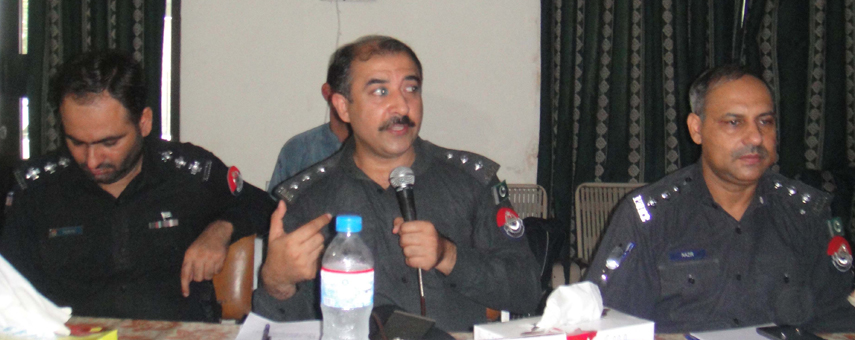
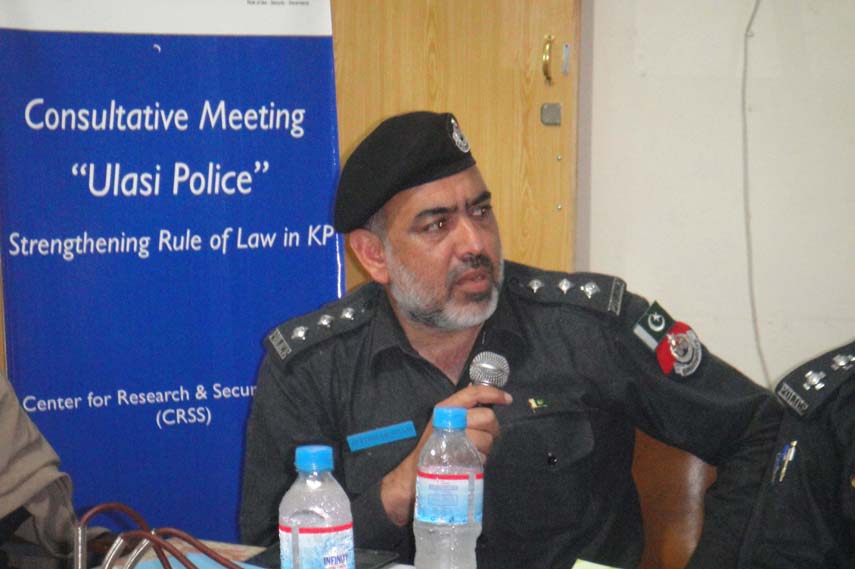
The members of working group on police reforms, during a consultative meeting at Press Club, Charsadda said that the training of KP police had been improved greatly; incorporating the contemporary capacity building needs and training standards to ensure maximum public service. In this regard, several specialized schools have been established in the province – to improve the capacity in the critical service areas – whose syllabus has been revised and tailored to the needs. Merit based and transparent recruitment has also been ensured in the department. The meeting was a part of the project “Ulasi Police”, which is an awareness and advocacy campaign undertaken by the Center for Research and Security Studies (CRSS) – as part of USAID Small Grants and Ambassadors’ Fund Program – to strengthen the rule of law in KP province by promoting and disseminating the significant police reforms aimed at incorporating local communities’ policing needs and international human rights standards. The endeavor aims to tackle the trust deficit between the public and police, help KP police become an accountable and community-focused police force.
They said that the KP police was ever more focused on the community policing by not only offering services that are oriented towards public welfare but also working in close partnership with the community. At the core of community policing are the initiatives of Police Assistance Line (PAL), Police Access Service (PAS), and KP polices’ flagship Dispute Resolution Council (DRC) to provide speedy justice to the citizens approaching police. Given the counter-terrorism role of police, the elite school of police has been established with dedicated training and units for different specialized areas. With the SOS service – aimed at enabling vulnerable institutions to inform the police about any emergency through just a tap on the mobile phone – and the elite services of police, the response time to the events of terrorism has been improved greatly. The Police Ordinance 2016, promulgated by the KP governor in August, lays specials emphasis on the behavioral issue of police and thus attempts to develop better public-police relations. They said that the political influence over the police has been finished and the police was then providing services to all the citizens regardless of their socio-political background.
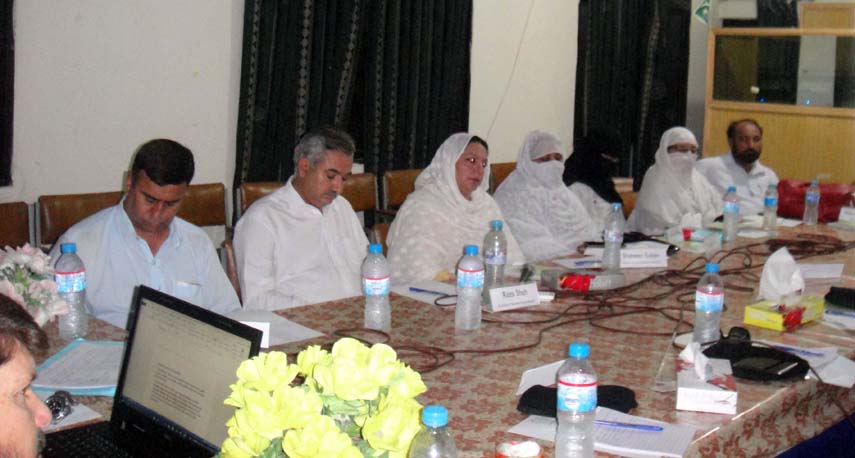
As part of the reforms, providing justice to the female victims of GBV and others crimes has remained a special consideration, and thus dedicated desks for women in several police stations of KP have been established.
The working group members of police included:
Mr. Iftikhar Shah, Deputy Superintendent Police HQRs, Charsadda, Mr. Nazeer Khan, Deputy Superintendent Police City, Charsadda, Mr. Sajjad Khan Deputy Superintendent Police Tanggi, Charsadda, Mr. Allama Iqbal Khan, Incharge PAL, Charsadda, Mr. Imran Khan, Station House Officer/ Sub Inspector, Police Station Charsadda, Ms. Suriya Begum, Lady Constable, Police, District Charsadda, Ms. Uzma Khan, Lady Constable, Police, District Charsadda.
The participating members of community said that one of the reasons of trust deficit between the public and police was lack of awareness about the police services on offer through the initiatives like Ulasi Police. They underpinned the need for greater transparency within the system of DRCs. Talking about the community policing role of local government representatives, they underscored the need of their joint working relation with police to act as a bridge and minimize the public-police gaps. They said that the services of police should be same across all the districts and the process of reforms should not be just limited to urban centers. The members were of the view that the investigation has also been massively improved and providing speedy justice, albeit there was room for further improvement.
The working group members from the community included:
Ms. Afsar Banu, Female Rights Activist/Local Government Representative, Mr. Kifayat Yousafzai, Journalist, Mr. Liaqat Khan, Advocate, Local Courts Charsadda, Ms. Shaheen Sultan, Political and Social Activist, Charsadda, Ms. Gulshan Arra, Minorities Councilor, District Charsadda, Ms. Samina Iftikhar, Social Activist, Ms. Palwasha, Advocate.