



The week of July 18-24 was dominated by news of several China Pakistan Economic Corridor projects potentially facing the axe. These qualms first put to rest by the Federal Minister for Planning and then the Chinese Ambassador to Pakistan. CPEC Security and the fallout after the South China Sea ruling also remained major themes this past week.
CPEC Delays
Several news agencies and papers reported that due to the other engagements of Prime Minister Nawaz Sharif, a delay has been observed in the execution of the China-Pakistan Economic Corridor (CPEC). However, he has been found reluctant toward the idea of army involvement in the administration of the CPEC projects.[1] Further, the Express Tribune reported that slow execution of the CPEC has become so alarming that five energy projects of worth $7 billion could be terminated.[2]
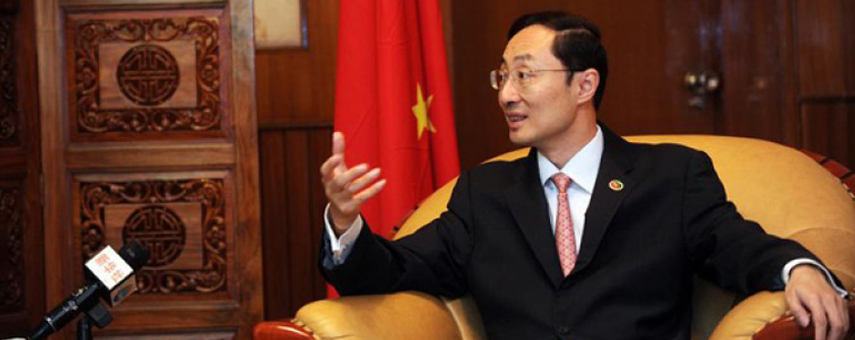
However, the Minister of Planning and Development Ahsan Iqbal ensured that the execution of the China Pakistan Economic Corridor (CPEC) project has not exposed any hurdles. He asserted that China has been appreciating the execution process, rather than objecting. The minister’s words may not have been enough for most detractors. However, his sentiments were mirrored by His Excellency Sun Weidong, the Chinese Ambassador to Pakistan, who said that the progress on the CPEC is smooth and the execution process is quite satisfactory.[3] This should lay to rest most concerns regarding the delays in CPEC.
CPEC Security and Provincial Disdain
The Senate Standing Committee on Planning Development and Reforms was informed that a group of security force has been recruited.[4] The 15,000 strong force includes 9,000 army men and 6,000 temporary civilians. Regrettably only 3 of the 12 members of the committee attended a meeting at the Parliament House.[5]

Khyber Pukhtunkhwa (KP) Chief Minister (CM) Pervez Khattak underlined that the government will ensure the security of personnel working on the CPEC projects.[6] This, and similar statements from political leaders are a weekly occurrence to underscore Pakistan’s commitment to the CPEC project. Simultaneously, Dr. Said Alam Mahsud, the Convener of the CPEC Committee of KP declared that the project would not be acceptable unless KP get its due share.[7] This is a strange and inopportune thing to say at this stage, when work on the CPEC is entering its third year soon, primarily designed to achieve political relevance and capitalize on public emotion. However, this will not stop the representatives of Awami National Party-Wali (ANP-W), which continues to accuse the government of foul play in route selection.[8]
European Parliament Vice-President Ryszard Czarnecki, while addressing a US Congress event, said Pakistan is violating Baloch human rights as CPEC project is being constructed against their will.[9] There have been grievances voiced by all provinces over the CPEC project, including Balochistan, but it is a stretch to say that the entire project is against the will of the Baloch people. This statement is more lip-service and point-scoring in front of an audience that is ever-wary of the expanding Chinese influence.
South China Sea
Following the Permanent Court of Arbitration’s ruling in favor of The Philippines last week regarding the South China Sea, the Australian Foreign Minister, Julie Bishop, has come out in support of the decision.[10] Naturally, this annoyed the spokesman from the Chinese Foreign Ministry. China has unilaterally rejected the ruling, and given role of the Court, there is no mechanism to enforce it.
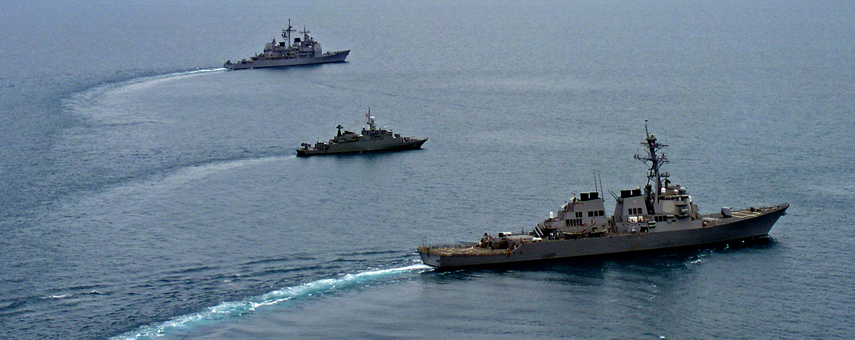
Xinhua also reported that China’s relationship with the Association of Southeast Asian Nations (ASEAN) is not vulnerable to disputes like South China Sea.[11]
The Philippines is understandably upset over China’s stance on the South China’s Sea, especially since the ruling. The Philippines Foreign Minister has underlined that dialogues or negotiations on the issue of South China Sea are not acceptable after the decision of International court.[12]
Western Route
Ulasi Tehreek Swabi President Muhammad Ali claimed that the federal government has been reluctant to provide fund for the construction of western route of the CPEC.[13] While the sentiment can be appreciated, it is a little premature to be asking for funds to start a phase of the CPEC project that is projected much further down the line. Political relevancy and constituent grief notwithstanding, it is impractical to build both routes simultaneously.
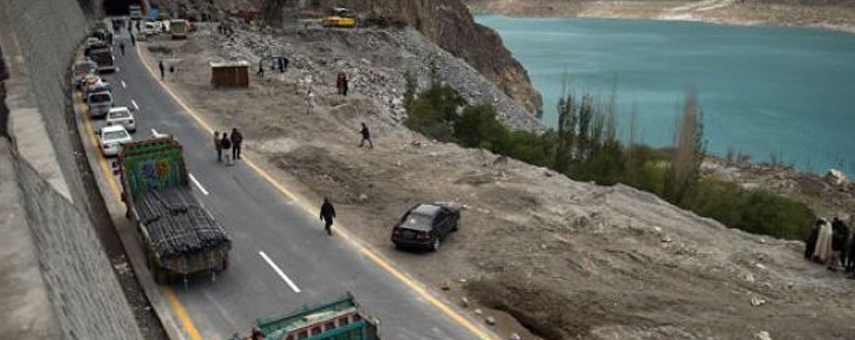
Mid-week, a member of National Highway Authority (NHA) and a group of the China Highway and Transportation Society led by its Secretary General Liu Wenjie had discussion over the western route of the CPEC. Both delegations exchanged view over the infrastructure and development work in their countries.[14]
General
To seek support and resolve of the Kashmir issue, the leader of Jammu and Kashmir Syed Ali Geelani for the very first time wrote to China and Iran.[15] Meanwhile, a representative from Chinese Foreign Ministry Lu Kang showed concern over the killing of innocents in the Indian held Kashmir and expected the dispute to be settled by negotiations.[16]
The State Bank of Pakistan (SBP) statistics indicated a 38.8% rise in foreign direct investment (FDI). Out of this amount of FDI, around $600 million net inflow is from China.[17]