


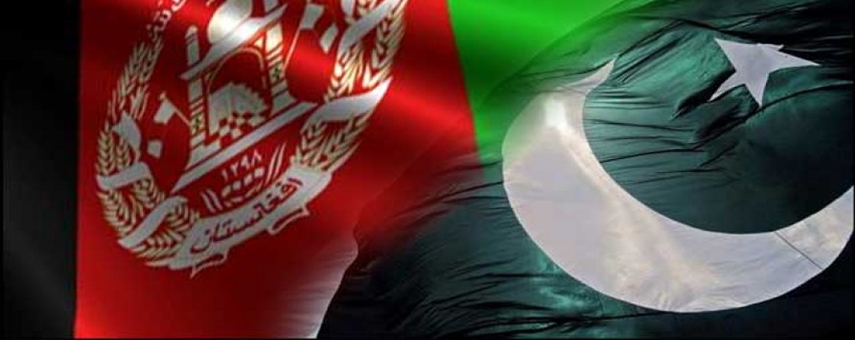
An eleven-member Afghan delegation comprising members of civil society and parliament arrived in Islamabad on Sunday, February 7, 2016 for a land-mark series of Track 1.5/2 meetings/ dialogues.
This initiative – called “Beyond Boundaries” has been undertaken by an Islamabad based independent think tank Center of Research and Security Studies (CRSS), in partnership with its Afghan counterpart organization, DURAN Research and Analysis (DRA) and sub-national partner (Pakistan), the Foundation for Integrated Development Action (FIDA) – is a major Pakistan-Afghanistan Track 1.5/II dialogue series to help improve relations between Pakistan and Afghanistan, soothe bitter context, deescalate tensions and tackle trust deficit. Beyond Boundaries comprises two working groups, the Regional Security Group, and Civil Society and Youth Group, aimed at facilitating and promoting people-to-people contacts.
The fifth meeting/ workshop in the series and the third meeting of regional civil society experts from Pakistan and Afghanistan is taking place from February 08-09, 2016 in Islamabad with several high level meetings on the sidelines on February 10, 2016. The dialogue unusual significance because of the high profile formation of working groups from both sides and the context between the two countries. The arrival of the Afghan delegation marks the continuity of dialogue – facilitated by CRSS – between the stakeholders from the two countries to the backdrop of a politically difficult and challenging environment.
The Track 1.5/II is also important because the bilateral relationship has been fraught with mutual mistrust being the proxy battleground for complicated regional relationships. An unstable Afghanistan-Pakistan relationship is fundamentally detrimental to peace and development in the region. Initiatives like Beyond Boundaries will bring together influential government and non-governmental stake-holders who can help lessen tensions, address misconceptions, and revive some level of confidence. More importantly, they will eventually urge both governments and key stakeholders away from the prior behavior of confrontation and an antagonistic-approach towards a more trust and collaborative-based approach for peace, security, and regional cooperation.
The working groups on Regional Security and Civil Society will address varied themes that are paramount in the peace process between Pakistan and Afghanistan. It is also supposed to build upon existing and increase future people-to-people contact.
The key objectives of the initiative are: expanding the peace constituency through friendship groups in both countries; and improving support for better Afghanistan-Pakistan relationship through dialogue among the influential stakeholders and informing policy makers through consensus recommendations.