



by Scott Nicholas Romaniuk
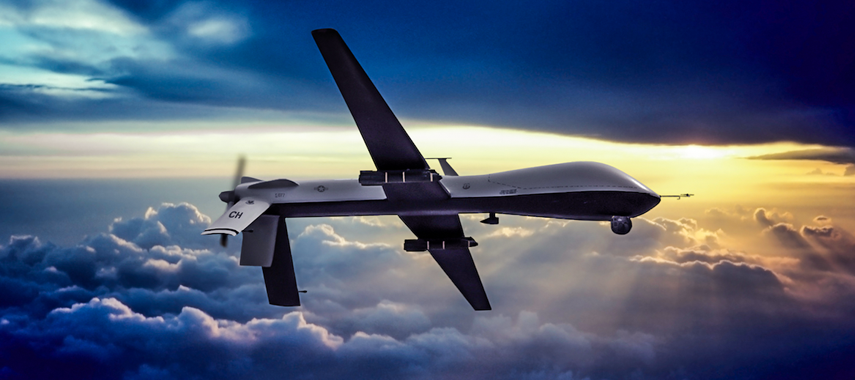
For over a decade, United States’ Unmanned Aerial Vehicles (UAVs), commonly referred to as drones, have been the primary instruments for secret strikes against suspected terrorists in Pakistan. Over the past decade, the number of strikes have risen significantly, resulting in roughly 2,500-4,000 deaths in some 422 strikes. Pressure has been building continuously on the US and the Obama administration for their increasing reliance on the drone strikes as part of their counter-terrorism policy in Pakistan and a handful of other countries as well, against the backdrop of Obama’s speech in May 2013 in which he stated that, “Before any strike is taken, there must be near-certainty that no civilians will be killed or injured.”
The casualty component is the basis for intensive debate about drone usage and what detractors of the application of drone technology in this manner refer to as inhumane warfare.
Drones are almost never spoken of in terms of the intricate yet critical role that they have played (not just in the past 15 years) in symbolizing the operating state’s (government and people) cultural principles and desire to improve the conditions of warfare. The US, along with the principle drone powers, like the United Kingdom (UK), and Israel, as well as some newcomers such as Pakistan and China (which is thought to fly armed drones but has yet to demonstrate their military application) have done much to fulfill this position.
When Pakistan was added to this list of militarized drone states, a relatively muted response was observed. Indeed, Pakistan continues to garner little attention for allegedly using militarized drones to attack terror activists within its borders.
These countries operate in what Robert Farley refers to as the “Golden Age of Drones,” the leading pack of drone technology countries and users will continue to grow. Drones were primarily tasked with intelligence gathering duties, surveillance, and reconnaissance (ISR) missions but they have long since crossed over into the realm of combat and even warfare. But the US, Israel, and the UK stand out, holding unique positions in drone technology development, drone militarization, and drone usage for some time even in spite of new drone powers.
Use of drones by these countries today reflect the slow but steady shift that has taken place over time, particularly in US military practice and war fighting , to move toward high-precision combat (i.e. surgical strikes) – the greatest possible neutralization of enemy forces with the few casualties possible and limited enemy deaths. Although many do not see it this way, states leading the charge in the Golden Age of Drones are seldom associated with the innovation that have taken place in their technological development along with the manner of their deployment and the support roles that drones fulfill in combat situations. The Regulus guided missile, Tomahawk cruise missile, and Hellfire air-to-ground missile form the continual development of precision weaponry. The two major world wars of the 20th century, Korea, Vietnam, Bosnia, Afghanistan, Iraq, and Syria are part of a US pursuit of “precision” in war that can hit military targets in urban centers and reduce the potential for civilian casualties. The notion of sanitizing war through clean, surgical strikes through the use of precision guided munitions (PGMs) in a constant state of development. Drones can loiter discreetly for weeks before firing at a potential target.
Weaknesses in the practical aspects of precision weapons can easily attract criticism. Precision bombing used in densely populated areas (such as Baghdad) prior to and during the 2003 US-led invasion of Iraq, and the destruction of buildings (the contents of which usually remain unknown), and an inability to distinguish between civilians and insurgents, whether in civilian-rich areas or not, can quickly and easily erode an actor’s precision morality and his moral high ground. Automated weapons systems now form part of a US societal preference for short, low intensity, and discreet military operations in US combat missions around the world. The US government is observing this preference but still working with the military branches more resistant to such approaches, which can make the concept of war and combat more attractive.
Farley recently explained that, “every US service employs thousands of drones, conducting missions that range from strike to ISR [intelligence, surveillance, reconnaissance] to communications relay. The drone campaigns over Iraq, Afghanistan, Pakistan, Yemen, and Somalia have captured imaginations, and not always in a good way. Not since the use of B-52s over North Vietnam has an air campaign earned quite so much international criticism. These campaigns barely scratch the surface of drones’ contributions to US military operations.
As drone warfare is defined as a “remote control” practice and part of a disquieting “Playstation mentality,” John Kaag and Sarah Kreps endorse the claim (through the idea of drone pilot “leisure”) that there is a “‘disassociation’ between these soldiers and their violent acts.” Operating militarized drones in combat is not at all comparable to playing a video game. The argument helps to reinforce the idea that the use of drones can only harm the nature warfare as it is conducted in an age increasingly defined by electronics and technological development. The security environments in which states find themselves today is stridently different from those decades ago. The age of (religious) extremism has shifted the manner in which war and combat is conducted as well as the way in which states must respond to both. What has come to be viewed as the problem of “disassociation,” challenges the bedrock logic on which detractors of drones and militarized drone usage frequently rely? Rather, an equally potent, but oft-dismissed (if even rarely acknowledged) weakness (or perhaps strength) of weaponized drone usage is over-association.
Drones are actually the opposite of “unmanned.” There is hardly room for disagreement that drones operating in conflict have a direct relationship with civilian casualties even though one would be hard-pressed to think of an armed conflict devoid of casualties. A major shift that has taken place in modern conflict is the tactics employed by terrorists and insurgents, who are becoming increasingly aware of the value in operating among a civilian population. Christina Farr, writing for Stanford University’s Center for International Security and Cooperation (CISAC), explains that, “[terrorists often choose to move undetected through the ranks of civilian populations. They hide in plain sight by wearing civilian clothes rather than uniforms or distinctive emblems. They are, as Professor David J. Luban, Univrersity Professor and Professor of Law and Philosophy at Georgetown University articulates, “Farmers by day and fighters by night.”
There is an even greater level of personal immersion in warfare through the use of drones; they are, says US Air Force Col. Hernando Ortega, “not unmanned at all. They’re manned to the hilt”. Drone crews shift between home and work on a continuous basis. They usually work 12-hour shifts. They are highly susceptible to fatigue and through what comes across as indirect involvement, drone crews feel the strains of war as any other military personal directly engaged on the battlefield. “Physically they may be thousands of miles from Iraq or Afghanistan,” writes David Zucchino, “Psychologically, they’re on the ground with troops. The Disconnect, and sense of helplessness, take a toll.” Over 40% of all drone pilots were highly stressed and 20% reported emotional exhaustion or burnout. However, for men and women operating drones, the impact takes place in a controlled environment.
Small Unmanned Aircraft Systems (SUAS) flight hours recording practices are still undergoing dramatic changes. In support of Operation Enduring Freedom and Operation Iraqi Freedom, more than 100,000 drone pilot hours were recorded. Those hours are critical for the reduction of civilian casualties, not just for the targeting of suspected or known terrorists. Pilots are unable to accurately target individuals without the hundreds of hours of flight time that it takes to confirm the identity of an individual. Environments are typically observed for many days in order to make precise assessments of the surroundings and build reliable profiles leading to the elimination of terrorists and militants at a reduced civilian casualty level. Many of the factors that enable drones and their operators to conduct missions against targets and strike them when they are isolated have become overshadowed by the civilians’ casualties that still go along with these strikes. Failing to properly isolate targets during drone strikes can contribute to the isolation of entire states and it is for this, among other reasons, that the US has made the reduction of casualties a priority.
Drones and militarized drone usage are not responsible for building a newer and more casualty conscience form of warfare or war fighting. Rather, the proliferation and application of automated weapons systems and the pursuit of precision-guided weapons that can lead to clean, surgical strikes is part of the panorama of military development that will always bring either unforeseen or unintended consequences. Militarized drone usage might be in an advanced stage compared to the types of systems used in previous wars only a few years or decades ago, but they represent a misleading, but promising relationship with the history and future course of military technological development and society. Unintended casualties have risen only as a result of the number of strikes performed over time and not because of the lack of intelligence gathering and surveillance attached to each mission. Drones are part of a long history, representing deep moralities, as well as innovative and determined pursuits to fix some of the most nefarious aspects of warfare.
*This article is a revised version of a Defence Report publication entitled, “Precision and Predators: Drones as a Human War of War” (August 8, 2015).
The author is a PhD Candidate at the School of International Studies, University of Trento (Italy). His research focuses on asymmetric warfare, terrorism and counterterrorism, international security, and the use of force.