



Is Pakistan safer?
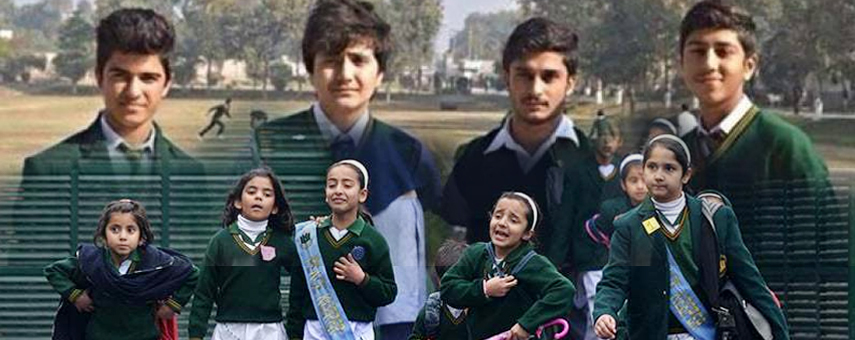
One year on, one can most probably argue that the dastardly Army Public School (APS), Peshawar attack on December 2014 finally provided the trigger that the country had badly needed all these years to forcefully take on all those who had been challenging the writ of the state of Pakistan. It also brought about a visible change in the ruling elites’ views on counter-terrorism and extremism. The massacre galvanized the civilian and military leadership into reviewing the security paradigm pursued until then. The result was Prime Minister’s 20-point counter-terrorism (CT) National Action Plan (NAP) announced in December 2014.
This convergence became visible also at the main APS commemoration event which was attended by all major stakeholders- P.M Nawaz Sharif, along with key members of the cabinet, army chief General Raheel Sharif, PTI chief Imran Khan, several provincial chief ministers and foreign dignitaries.
The NAP – effectively the first formal counter-terror framework -provided for the creation of speedy trial military courts, called for measures to end all private militias, activation and reinforcement of the National Counter Terrorism Authority (NACTA), recommended rigorous enforcement of existing laws against sectarian hate speech, extremism, minority rights and recommended immediate madrassa (seminaries) reforms. All these steps became part of the 21st amendment to the Constitution when the parliament passed it unanimously on January 6, 2015.
The Peshawar assault generated an unprecedented momentum;
After a very long time, Chaudhary Nisar, the interior minister, and many opposition legislators such as Aitzaz Ahsan began a conversation that centered on critical themes like peace through rule of law, respect for diversity, rejection of hate speech and respect for others through a rights based narrative embedded in the constitution.
As a consequence, until November, the interior ministry sealed 102 seminaries for fanning extremism or sponsoring terrorism. It also froze over Rs. One billion worth of funds sitting in 126 accounts of proscribed militant groups. As many as 7,000 cases were filed, some 6,855 alleged hate-preachers arrested and about 1,482 have convicted of hatemongering on loudspeakers.
The military set up 11 military courts, 142 cases were referred to it, out of which 55 cases were decided, 31 militants were convicted while 87 cases are in process. The lifting of moratorium– though a questionable knee-jerk reaction – led to nearly 300 executions.
Elimination of Malik Ishaq (Chief of banned sectarian outfit Lashkar-i-Jhangvi) and several others in “police encounters” also seemed to stem from NAP.
The Securities Exchange Commission of Pakistan (SECP) cancelled licenses of several International Non-Governmental Organizations (INGOs) and the government asked them all to apply for fresh registration with the Ministry of Interior. This triggered an outcry within development sector but most INGOs did comply and went for fresh registration.
Operation Zarb- e- Azb and NAP
Regardless of the numbers of fatalities churned out by the Army officials, the Operation Zarb-e-Azb launched in June 2014 has certainly changed the militant landscape considerably.
“One of the biggest achievements of the plan was the physical operations in Federally Administered Tribal Areas (FATA), which allowed the army to establish government writ in the thus far ungoverned, no-go areas”, Lt. General Asim Bajwa, the ISPR chief says.
Disruption, degradation, and dismantling of the physical infrastructure in the mountains of Waziristan and Khyber forced them to take refuge across the Durand Line; manifest in the fact that a few TTP stalwarts such as Shahidullah Shahid and Saeed Khan Orakzai were in killed in US drone strikes in eastern Afghanistan. Most of them are reportedly operating out of safe havens in Afghanistan’s Nangarahar, Kunar, Paktia, Paktika and Khost provinces.
Nationwide incidents of terrorism that had peaked at 2,061 in 2010 are down to 1,109 showing a little over 50 per cent reduction, according to NACTA figures. Open-source data on violence being compiled by the Center for Research and Security Studies also corroborates official claims on the declining terror incidents.
But is NAP working well? Not entirely because a) of socio-political expedience , b) several capacity issues within the civilian security establishment and, c) the tardy criminal justice system that allows criminals to thrive and survive.
Have militants been defeated? Certainly not- if our yardstick is the religious ideology that the terrorists use to justify their violent actions – Neither should the government make such claims.
Former UK army chief General David Richards had once said it is difficult to defeat an ideology. We should however try to deny it the socio-political space through good governance. And herein lies the challenge for Pakistani leaders. As long as there are even a handful of such terrorists they can always execute attacks any time they would choose.
NAP has also created an unprecedented space for a more critical and bolder discourse on some fundamental issues as well – evident also from recent observations by the apex Supreme Court in blasphemy related cases offer a case in point; while the Court, in a courageous move upheld the death sentence awarded to Mumtaz Qadri, the killer of former governor Salman Taseer in January 2011 – It also supported calls for reforming the country’s blasphemy laws, which it said was often misused for personal motives.
Troublesome Slow Pace
The pace of NAP implementation, however, remains the source of discord between the civilian government and the military high command. There are major capacity issues within the civilian governance structures. It also led to a spat between them following a corps commanders’ press conference, where the military expressed its reservation about the wanting implementation.
It was only after army chief General Raheel Sharif’s reservations in this regard, for instance, that the government moved to constitute a National Terrorists Financing Investigation Cell (NTFIC) under the joint vigil of the FIA, State Bank, FBR and intelligence agencies in November.
Only because of these reservations, Gen.Sharif even decided to sit in a meeting that the government had convened for discussing the madaris registration and enforcing accountability mechanisms with representatives of various religious boards. The context was his displeasure with the police actions with regards to the NAP goals. This issue continues to linger on.
Way Forward
The political and economic way forward demands a strategic rethink and bold decisions flowing from this rethink. Off-setting the impact of the war on terror and the TTP-led terrorism is not going to be easy. But further damage control is certainly possible.
Mere half-hearted administrative measures, however, will not suffice. The national leadership shall have to also prioritize rehabilitation and development of the most affected FATA and the Khyber-Pakhtunkhwa province.
Also, Pakistan’s financial bleeding because of insecurity will stop only if the police and prosecution were revamped through a comprehensive reform of the Criminal Procedures Code (CrPC).
The Heart of Asia conference on Dec 9 at Islamabad provided Pakistan with a golden opportunity to step up its Counter Terrorism (CT) campaign as well as play a central role in stabilizing Afghanistan, both in terms of political support, and leveraging its sway with the Afghan Taliban to create stability. The gathering also became the pretext for India to reengage with Islamabad, as its foreign minister Sushma Sauraj agreed to allow officials to resume the stalled bilateral dialogue.
The conference also offered an opportunity to reset the contours of the foreign policy. By addressing Indian and Afghan concerns in a demonstrable credible way Pakistan can hope to regain the international trust and reemerge as a strong regional player.
If Pakistani leaders desire sustainable peace and stability in the region, normalizing its relationships and improving trade with neighbors is a paramount prerequisite and equally important to the China Pakistan Economic Corridor (CPEC).
The economic support China has offered – $ 46 billion spread over the next few years – represents the golden chance for Pakistan to recalibrate its security doctrine.
It could be safer in 2016 and beyond only if it starts looking at geo-economics as the survival tool instead of deploying geo-strategic arguments to defend a dated security paradigm.
Its tremendous leverage lies in its geography. Making the geography secure and flagging it as the leverage could also work as a guarantee for China’s continued engagement in Pakistan. It must seize the Chinese investment and cooperation as a God-sent opportunity by removing administrative capacity gaps and through a rigorous rule of law regime to discourage criminal and terror syndicates.
By: Imtiaz Gul
The writer is the Executive Director of Center for Research and Security Studies (CRSS).