



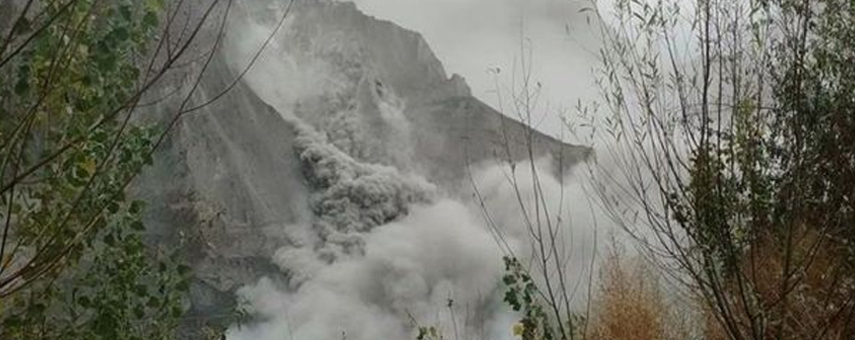
On October 26, 2015, Pakistan and other countries in South Asia were hit by one of the strongest recorded earthquakes. The northwestern province of Khyber Pukhtunkhwa reportedly suffered the most with over 200 deaths recorded within 48 hours of the tremors. The quake left large parts, mostly in mountainous and hilly regions, a trail of destruction of property and damages to infrastructure.
This is not the first time an earthquake has affected Pakistan. In September 2013, an earthquake in the province of Balochistan resulted in 386 deaths and affected over 27,000 families. Furthermore, most Pakistanis of my generation clearly remember the tragic 2005 7.8 magnitude Kashmir earthquake, which left 75000 people dead, thousands injured and an estimated $7 billion loss to the Pakistani economy.
According to United States Geological Survey (USGS), the territory of Pakistan is in a region categorized as “Indus-Tsangpo Sucture Zone[1]” – and is vulnerable to strong earthquakes due to continuous movement within thrust faults. This implies that due to the unpredictable nature of these movements, Pakistan will have to remain ready for such disasters in the future.
An important question is whether the Pakistani government has learnt any lessons from past experiences (Kashmir 2005, Balcohistan 2013) to respond effectively to these emergency situations?
It is important to note that natural disasters of such massive scale have long term implications for recovery, rehabilitation and reconstruction. Unfortunately, despite the huge loss of life and property and massive donations from the international community after the Kashmir quake, the ability of government institutions to respond still remains practically limited – and legally vague.
Traveling from Islamabad to Muzaffarabad, the capital of Pakistan-governed Azad Kashmir one can see how life in these regions have not changed much in the last ten years; the healthcare centres are without any trained health care professionals; there are little or no facilities available for emergency treatment and the existing infrastructure for public health facilities remains poor and – rather scary.
Ten years ago, there was no concept of seismic safety in building construction. Building codes were developed but never implemented in letter and spirit. Today, construction business continues to grow as one of the biggest businesses around the country with poor checks and balances. This alarming scenario puts at stake lives of thousands of ordinary citizens.
The sad reality is that despite Pakistan’s vulnerability to earth-quakes, disaster management remains a relatively ignored subject in government circles. The issue only gets attention of legislators when the country is hit by another disaster. It took the federal government six months to formulate the reconstruction policy due to lack of preparedness after the Kashmir disaster of 2005. Furthermore, it was only in 2009 that the Urban Search and Rescue teams formed by National Disaster Management Authority became operational.
But here we are, hit by another earthquake. Although, the loss of life and property is not as much as that of 2005, it is yet another wake up call.
The government needs to make effective policies to address challenges posed by large scale disasters. Federal and Provincial government should include disaster management a long term priority and build capacity of institutions.
To begin with, the government should strictly implement building control rules and regulations and penalize those construction firms that violate these rules. Provincial and federal governments must strive to enhance capabilities of public health institutions to respond to humanitarian response challenges in the aftermath of such disasters. Also, medical rehabilitation following a disaster should be ensured by providing a well-trained, multi-disciplinary team of rehabilitation professionals led by physiatrists.
Without strong political will, an affective and national wide functional disaster management system remains nothing but a dream. Our government must treat the recent earthquake as another wake-up call and put their act together to devise effective strategies – which reduce vulnerability of citizens in the aftermath of future disasters.
Written by Shumaila Ishfaq
The writer is a Research Fellow at Center for Research and Security Studies (CRSS) and can be reached at shumaila@crss.pk
______________________________________________________________________________
[1] See: http://www.dawn.com/news/1215636/pakistan-in-the-most-active-quake-zone-says-us-geological-survey